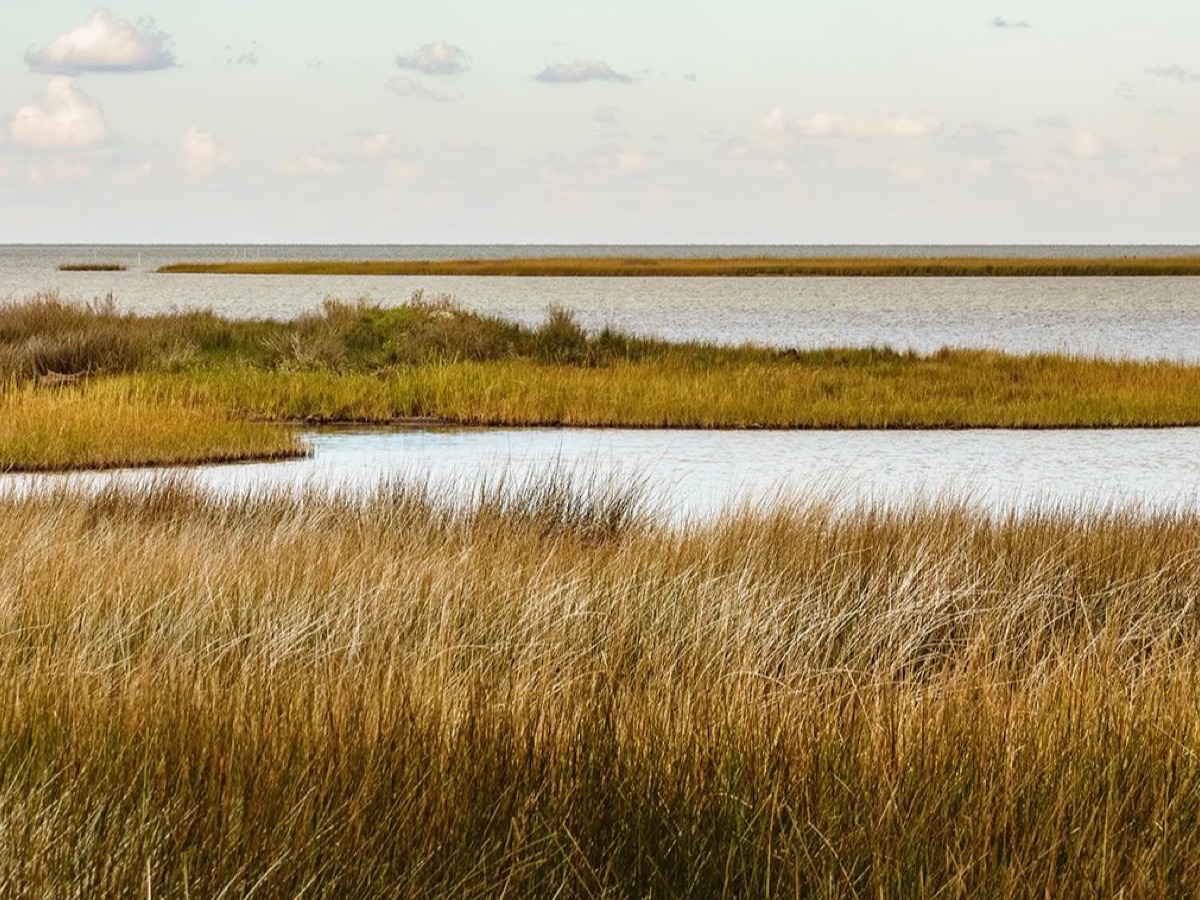
The saltmarsh is zoned like a slow staircase, and every plant on it is doing a job the sea can test.
The first plants appear where the mud is still soft enough to take a boot. Glasswort, fleshy and jointed, reddening at the tips in the July sun. Sea purslane, grey-green and low. A little further in, samphire stands upright in the creekside ooze. Further still, where the tide only reaches on the biggest springs, sea lavender opens its papery mauve. The marsh is a staircase and each step has its own tolerance.
A garden sorted by salt
Salt is the organising force here. The plants nearest the channel take the most of it and have found ways to cope: thick leaves, waxy skins, water stored against the dry hours. Glasswort and samphire are succulents by necessity, not by fashion. Sea purslane keeps its leaves small and its growth low. The ones higher up escape the worst of the brine and can afford softer, larger leaves and taller stems.
People call these weeds. A saltmarsh without them would be a mud flat in a year and a hole in the coast in ten. The roots bind the sediment; the stems slow the water; the dead growth feeds the marsh back into itself. The plants are the wall.
Cordgrass and the business of making land
Cordgrass does the heaviest work. Its roots run deep and its stems stand stiff against the current, trapping silt until the ground rises. One clump becomes a tussock, a tussock becomes a bank, and in time the bank is high enough for the next plant in the sequence. The marsh builds outward from the inside, one tide-borne grain at a time.
Walk on it and the ground gives like a mattress, then firms. Walk on it in winter and it crunches. Either way the stems come back. Cordgrass is not delicate. It is the reason the rest of the staircase exists.
Samphire, and the question of picking
Marsh samphire is edible and briefly fashionable in restaurants, which brings pickers down the creek in July. A little cropping does no harm. The trouble comes when whole beds are stripped or the plants are pulled by the root. I take the top inch from a few stems on the outside of a clump and leave the rest. It is enough for a supper and it leaves the plant standing.
The sea lavender is another matter. Its flowers last for weeks in a jar, and people cut armfuls. A stem here and there is nothing; a bare field is a loss. I pick no more than five and only where the clumps are thick.
Walking without trampling
The marsh looks robust and is not. A hundred boots on the same line will wear a channel through the samphire and compact the mud beneath. Stick to the creek edge where the ground is already bare, or use the boardwalk where there is one. On a spring tide, the water will find any path you have made and widen it.
The best time to look is low water on a neap. The plants are exposed and the light is soft, and there is no hurry. Take a hand lens. The detail on a glasswort stem, the salt crystals on a purslane leaf, the tiny flowers of sea lavender, is worth more than another photograph of the view.
What the marsh is for
At the top of the staircase the plants give way to rough grass and then to the sea wall. Beyond it the estuary works, the birds feed, the tide lifts and drops. None of it would hold without the green, salt-adapted scaffolding below.
It is a quiet sort of heroism, and it asks nothing of us. Keep off the beds, leave the flowers, and the staircase stays standing.