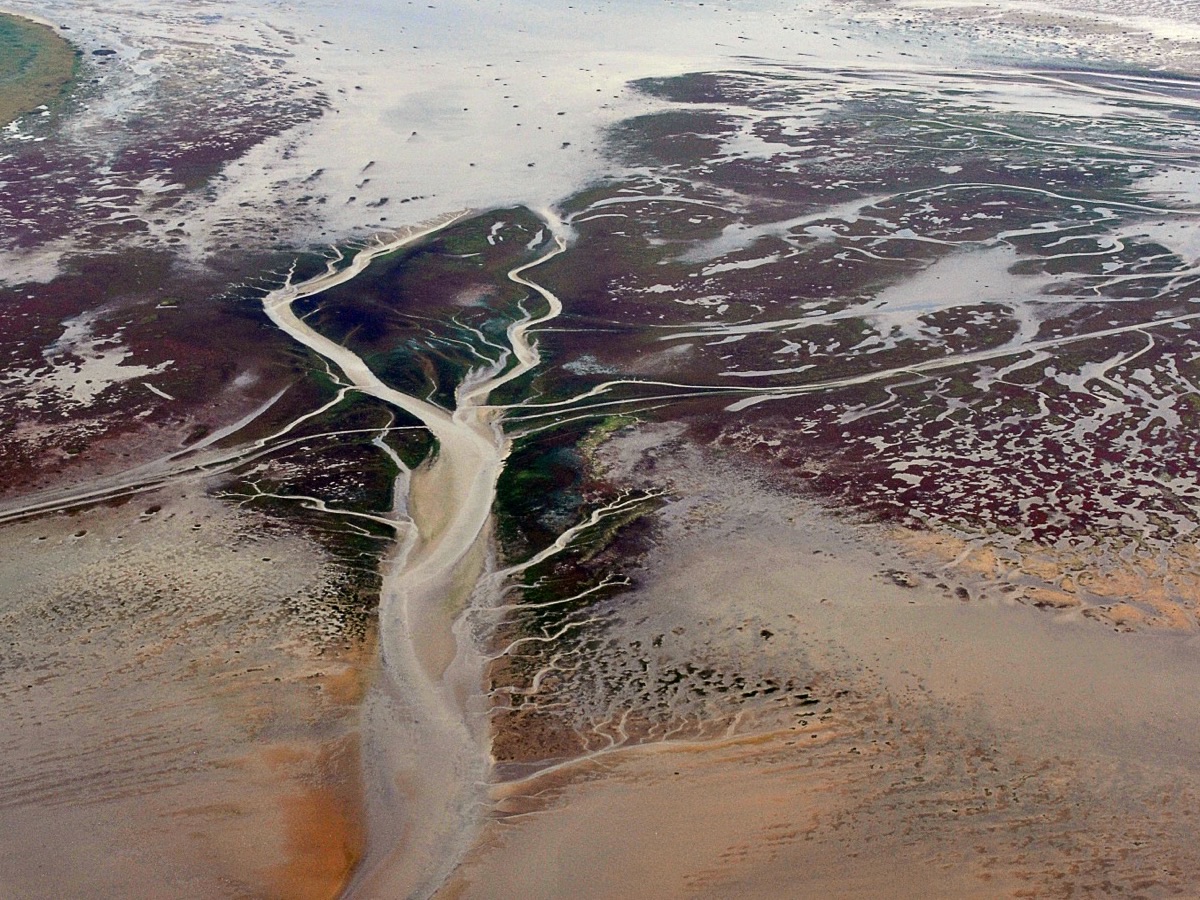
A tide table is not a schedule for the sea. It is a set of predictions, and the estuary revises them.
The nearest tide table is pinned inside the bus shelter, one sheet for the month, the heights printed in a column neat enough for a ledger. Visitors photograph it. Locals barely glance. That is not because we know better than the table. It is because we know what the table cannot say.
Numbers with a local accent
A tide is predicted, not ordered. The water arrives at the angle the wind gives it, at the speed the barometric pressure allows, and in the shape the channel has been cut into the mud. A southerly can hold the tide back for an hour; a north-westerly can push it over the wall twenty minutes early and higher than any printed figure. The table says 4.1 metres. The wall, in a gale, may disagree.
The marsh has its own corrections. At the western end, the creek bends sharply and the ebb is slow, so the mud stays wet long after the table says low water. At the eastern end, the bank is higher and the water leaves early. Two points on the same estuary, one table, two different afternoons.
Springs, neaps and the shape of a month
Spring tides come with the full moon and the new one, and they are not a seasonal event whatever the name suggests. They are the month's biggest tides, and they reach the salt pans, the lower path and the grass in front of the bank. Neaps are smaller and duller and leave a wide wet apron of mud through most of the day. The birds know the difference better than any chart. So do the plants, which hold the high marsh in place through both.
I keep a notebook with the tide times and what the weather did. It is a poor substitute for a proper record, but it has taught me more than the harbour wall ever could. On windless mornings the tide matches the table almost exactly. On the others, my notes run to margins and arrows.
Plan around the water, not against it
If I want to watch waders, I go as the tide is falling and stop when it turns. If I want to see the creek fill, I go two hours before a neap high and stand well back. For the sea lavender in July, a mid-morning low tide is better, because the flowers sit on the high marsh and the light is right when the water is away. The marsh is generous with beauty at almost every state of tide, provided the visit is timed with it and not against it.
The sea wall is safe in all but the biggest springs and the worst wind. Even then, the slipway is the weak point and the gate can be closed. A tide table has no opinion about that gate. The gate is the practical document.
The table as a starting point
I still use the table. It tells me the shape of the day and when the good hours are. Then I stand at the gate, look at the sky, feel the wind, and read a second table, the one made of grass and mud and cloud. Between the two there is usually a workable morning.
At the end of the month the printed sheet curls and tears. Someone pins up the next one. The sea comes in at roughly the listed hour, more or less, and the estuary keeps its own counsel.